

Internal Condoms
Formally called 'female condoms', internal condoms are the barrier method we don't really talk about!

Internal condoms are very similar to external condoms, the only differences are they are inserted into the vagina or anus, and they have a flexible silicone ring that keeps the condom open inside the body to prevent semen entering.
Internal condoms are 79 per cent effective when used correctly and protects against STIs.
🚨 DISCLAIMER: Historically internal condoms have been called ‘female condoms’ or femidoms, but it isn’t only cis women who use internal condoms, hence why we now say ‘internal condoms’.
The first historical mention of the female or internal condom comes from Greek mythology, where god Minos inserts a goat’s bladder into his mistress to catch his poisonous ejaculatory fluid.
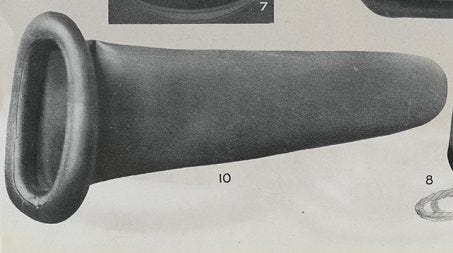
In 1923, Marie Stopes created a thick, rubber version of the internal condom, which resembled a sheath designed to rest in the vaginal canal. The internal condom as we know it today was first approved by the FDA in 1993, distributed by Wisconsin Pharmaceutical and made of polyurethane, which was designed to be washed and reused.
However, suer were not happy, mostly because of how noisy the material was, and the high price point.. which is still an issue to this day.
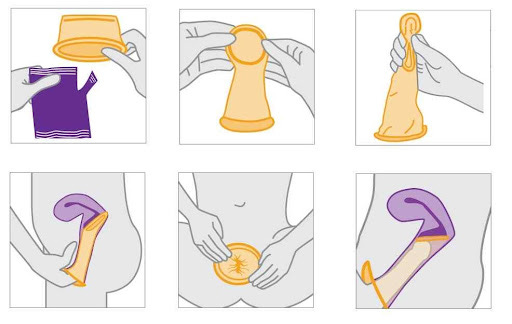
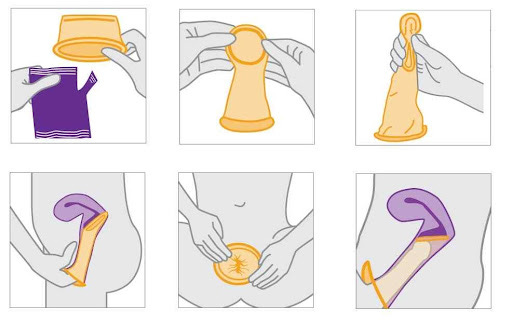
How to insert an internal condom:
Open the condom gently, check for any rips or tears, slowly unravel the condom keeping the silicone circle inside, at the very tip at all times
Lie down or squat
Twist the rubber ring at the closed end and insert into the vagina or anus
Push the ring as far into your vagina as you can
The latex ring at the end of the condom (the opening) must remain outside the body to allow accurate entry
Don’t worry if the condom is loose, internal condoms are meant to be a bit baggy
After sex twist the outer ring of the condom to keep any semen inside the condom and gently pull it out
Wrap the condom in tissue and throw it in the bin (don’t flush it down the toilet)
It’s a good idea to put the condom in before the penis touches the vagina or genital area
You can put the condom in when you are lying down, squatting or with one leg on a chair. It’s worth experimenting with putting the condom in to find the position that suits you best
✅ Pros and Cons
Pros
Protect against both pregnancy and sexually transmitted infections (STIs)
Can be inserted up to eight hours before before you have sex
Only need to use them when you have sex
No side effects
95% effective at protecting against pregnancy when used correctly
Can be used in addition to other methods (e.g. the pill, implant, injection) for extra protection
Made of polyurethane so are suitable for people with latex allergies
Still effective if using medication in the genital area, such as creams, suppositories or pessaries.
Can use any lubrication with them including: body oils, creams, lotions or petroleum jelly
Cons
Can slip or get pushed up into the vagina if not used properly – if this happens or you are worried you may need emergency contraception
Less accessible and can be more expensive than other condoms
Single use
😩 Unpopular
While this version was more popular, internal condoms remain underused.
The main reason being that they aren’t accessible. You can find external condoms in most pharmacies or sexual health clinics, but finding internal condoms is another world. And if you’re allergic to latex, finding latex-free internal condoms can be even more difficult… they really don’t make safer sex cheap do they?
Another issue is the lack of education around their use. Most folks, including adults, I speak to about barrier methods have either never heard of internal condoms, or have no clue how to use them.

Have you ever used an internal condom? Let me know 👇
I've never used one, I'm not even sure I've ever seen one available to take or purchase!